
Note: This site is no longer being maintained. For the latest version of this post, please go to Points to Ponder in Genesis 24-33
To accompany your Come Follow Me study for March 2-8
In addition to reading these chapters, you may want to:
- See the following videos;
If you would like a Kahoot game related to these chapters which you could use with your family or your class, or which you could play or learn from individually, click here for Genesis 24-27: https://create.kahoot.it/share/genesis-24-27/8bb292fe-01c5-4102-b05e-8c695dde23f9. For a similar Kahoot related to chapters 28-33, click here: https://create.kahoot.it/share/genesis-28-33/a9f695d4-8573-4120-a57d-047fd808279a.
Points to Ponder in Genesis 24-33
1. How many interesting parallels can you find between the life of Isaac and that of his father Abraham?
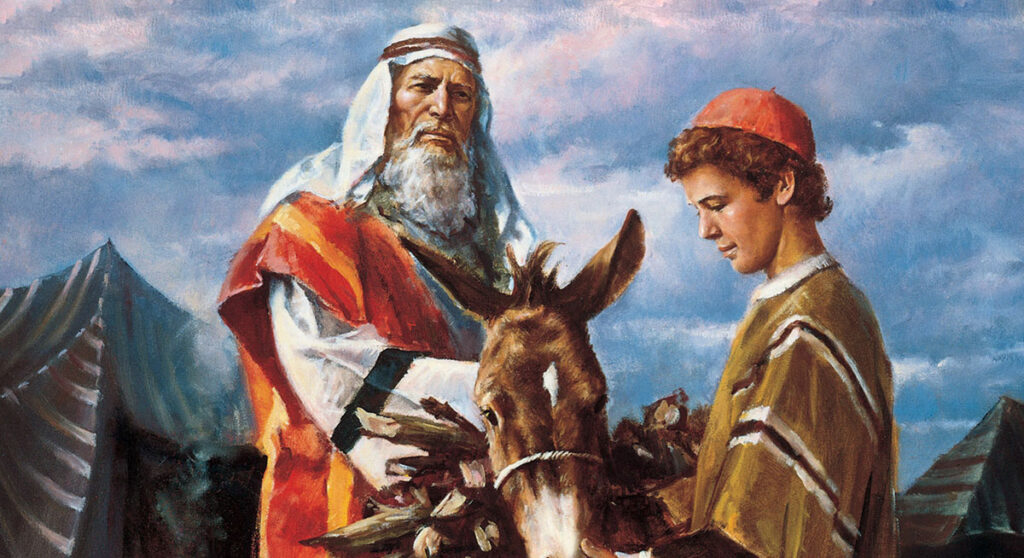
2. What are the most important points to remember, in your opinion, from the story of the marriage of Isaac and Rebekah in Genesis 24?
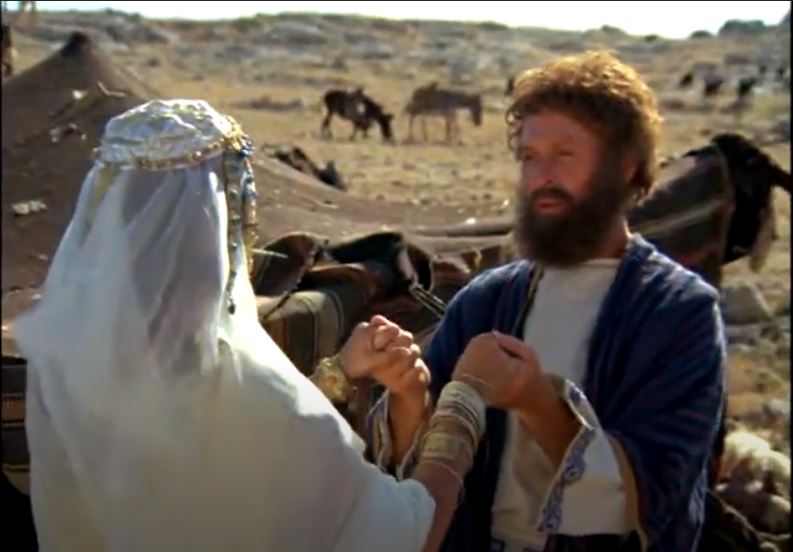
3. Would it be okay for us to ask the Lord for a sign like Abraham’s servant did when he asked the Lord to let the future wife of Isaac be whatever young woman not only offered him water but offered to water his camels as well?
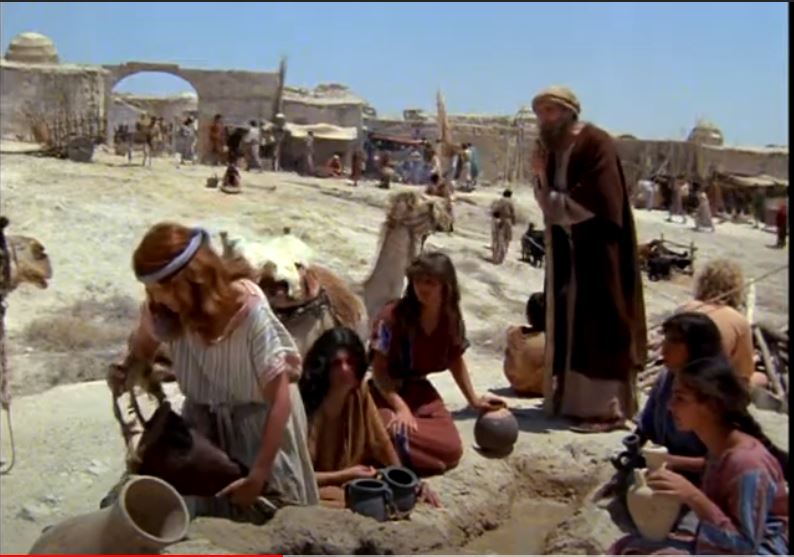
4. What do you consider to be the most important principles in Genesis 25 that Moses would hope we would remember?
5. Why would Rebekah have given her second son the name of “Jacob”? What did the name mean?
6. Why does Moses insult Jacob in Genesis 25:27 by calling him a “plain” man?
7. Just what was the “birthright” which Esau sold to Jacob, and what is the easiest way to find out?
8. Wasn’t it unfair of Jacob to refuse to feed his brother, who was on the verge of starving to death, until he had extorted his birthright from him?
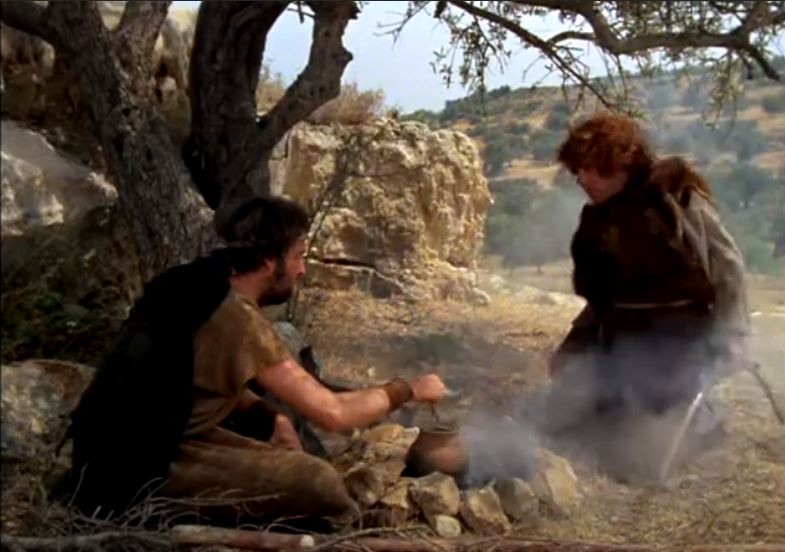
9. What would be a modern equivalent of Esau’s selling his birthright for a mess of pottage?
10. What are the most important lessons we get from Genesis 26?
11. Why were Isaac and Rebekah so sorrowful when Esau married? (Genesis 26:34-35.)
12. Why did Abraham, Isaac, and Jacob all want to marry relatives?
13. Why was Isaac promised great blessings (26:4-5) just because his dad had been so righteous? How does that square with our second Article of Faith?
14. With which of the following statements do you most agree, and why?
a. Jacob was justified in deceiving his father as to his identity, since Isaac was a bit senile, Esau had already sold his birthright, and the Lord had decreed before Jacob’s and Esau’s birth that the younger son would rule over the older one.
b. Jacob’s deceit of his father was a low point in Jacob’s life, as it is “contrary to the order of heaven for a just man to deceive.” He should have trusted the Lord to bless him in his own due time rather than try to “steal” the blessing. It was poetic justice that Laban similarly deceived Jacob some years later by substituting Leah for Rachel on Jacob’s wedding night and that Jacob’s own sons later deceived him about Joseph’s disappearance.
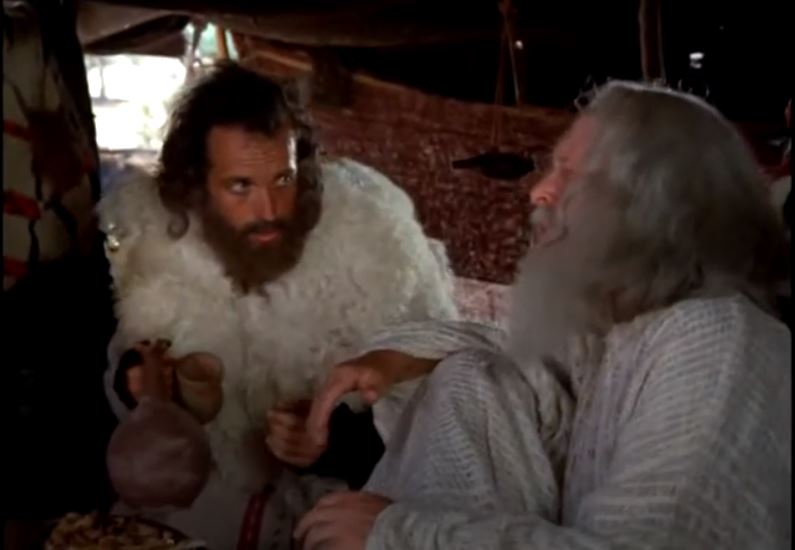
15. It probably makes the Genesis stories more interesting if we can remember how everyone is related. For example,
a. How was Abraham related to Sarah before they were married?
b. How was Isaac related to Rebekah before they were married?
c. How was Jacob related to Leah and Rachel, whom he will marry in next week’s reading?
16. How many trials can you find in these chapters that the Lord let Jacob endure in the process of his becoming a worthy heir to the blessings conferred upon Abraham and Isaac?
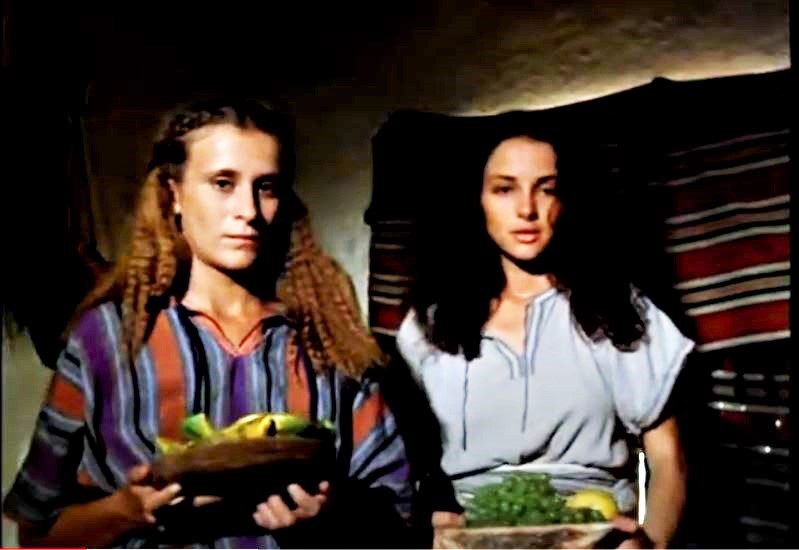
17. What instances or evidences can you find in these chapters of Jacob’s goodness which would qualify him for the covenant blessings?
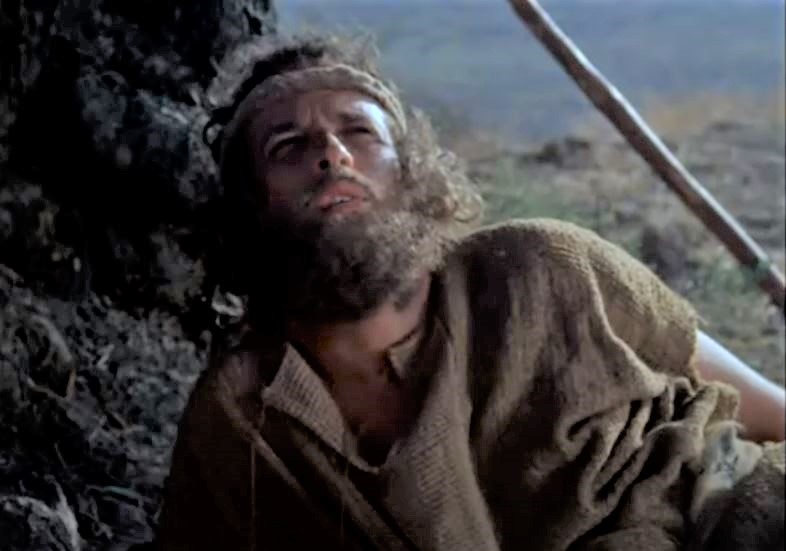
18. What examples of human weakness can you find in Jacob in these chapters, showing that the Lord’s blessings can come not only to the sinless but to the repentant?
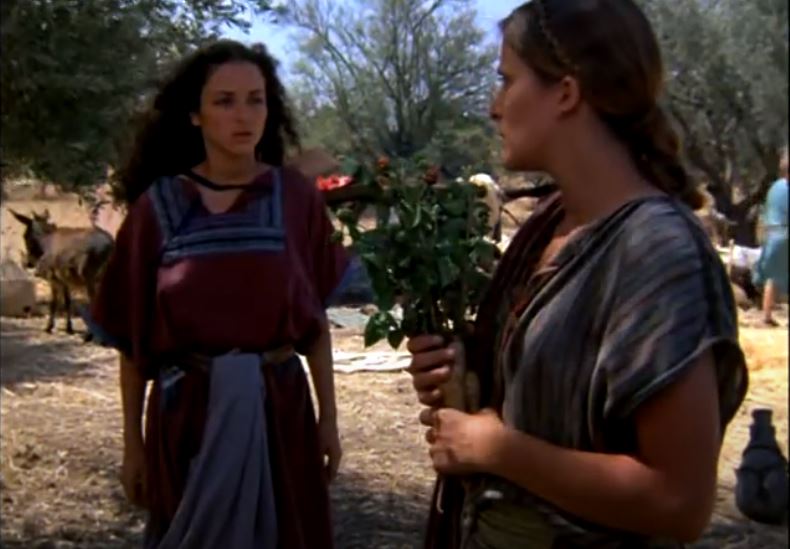
19. What spiritual blessings, revelations, and tender mercies can you find Jacob receiving in these chapters?
20. How do you explain Laban’s receiving revelation from God when he himself was worshipping idols? (31:24, 30.)
21. Why would Jacob kiss Rachel the moment he met her? Why did he weep afterwards? (29:11)
22. How sorry do you feel for Jacob when after waiting seven years to marry Rachel he found that Leah had been palmed off on him instead? Was this an appropriate fate for one who had pulled a similar trick on his own father and brother?

23. What partially redeeming qualities do we see in Esau in this week’s reading?
Possible Answers to Points to Ponder in Genesis 24-33
1. How many interesting parallels can you find between the life of Isaac and that of his father Abraham?
- Both traveled to Gerar—the land of the Philistines—when famine struck. Due to famine, Isaac planned to travel to the same place that Abraham went—Egypt.
- The Lord appeared to both and promised the same temporal and eternal blessings to both.
- Both had a child later in life
- Each misrepresented a beautiful wife to Abimelech as his sister, though the Abimelech with whom Isaac dealt was probably the son or grandson of the one Abraham encountered. “Abimelech,” which means “my father is king,” may well have been a title for the Philistine monarchs, much as “pharaoh” was for Egyptian kings.
- Both initially had two sons, with the younger being more blessed than the older
- The two sons in each case had to be separated to protect the younger.
- Both were blessed with great material riches.
- Both came to need more space and water for their flocks, and both took measures to avoid conflict with their competitors.
2. What are the most important points to remember, in your opinion, from the story of the marriage of Isaac and Rebekah in Genesis 24?
For me they would be:
- Importance of temple marriage. It was important that Isaac not marry one of the neighbor girls but someone from his extended family, who had the same religious beliefs. It was important enough to send Abraham’s servant some 300 miles via camel to get a proper wife for Isaac. President Spencer W. Kimball said, “Any of you would go around the world for the sealing ordinance if you knew its importance, if you realized how great it is.”
- Availability and importance of personal revelation. (To Abraham, to his servant, and most probably to Rebekah.)
- Qualifications of a good wife.
- Hard work—Rebekah offered to water all ten of the camels of Abraham’s servant in addition to providing them with straw and food!
- Faith—Rebekah was willing to follow Abraham’s servant and marry Isaac, sight unseen.
- It was an extra bonus, but not a qualification per se, that Rebekah was the most beautiful woman the servant had ever seen.
- Isaac showed his spiritual sensitivity by taking time to go out into the field to meditate. (24:63)
- Love can grow in marriage. 24:67 indicates that Rebekah became Isaac’s wife and that he loved her, in that order!
3. Would it be okay for us to ask the Lord for a sign like Abraham’s servant did when he asked the Lord to let the future wife of Isaac be whatever young woman not only offered him water but offered to water his camels as well?
Presumably, we could ask. But we would do well not to count on it being the final answer unless the Lord gave us some special inspiration that it was so, as the Lord must have done to Abraham’s servant, even though it is not recorded.
4. What do you consider to be the most important principles in Genesis 25 that Moses would hope we would remember?
- Worthy women are as entitled to personal revelation as men. (Rebekah, not Isaac, was the more spiritually in tune with the Lord’s will concerning Jacob and Esau. Elder Bruce R. McConkie wrote: “May I now take our common ancestor, Rebekah, as a pattern for what her daughters in the Church today can do? … When Rebekah was troubled and needed divine guidance she herself took the matter up with the Lord, and He spoke to her in reply. The Lord gives revelation to women who pray to Him in faith.”)
- If we are patient and worthy, all promised blessings will eventually come. (Isaac waited 20 years for children.)
- If we don’t appreciate our blessings, we can lose them. (Esau despised his birthright and voluntarily relinquished it.)
5. Why would Rebekah have given her second son the name of “Jacob”? What did the name mean?
Jacob meant “supplanter.” Rebekah knew, even if Isaac didn’t yet, that Jacob, the second born, was to replace or “supplant” the firstborn as the covenant son.
6. Why does Moses insult Jacob in Genesis 25:27 by calling him a “plain” man?
No insult is intended. By following the footnote (which is always a good idea), we find that the term translated as “plain” in the King James Version in the original Hebrew meant “whole, complete, or perfect,” as well as “simple” and “plain.” Other translations in English include “quiet,” “peaceful,” “upright,” “mild,” “even-tempered,” and “civilized.”
7. Just what was the “birthright” which Esau sold to Jacob, and what is the easiest way to find out?
By going to the Bible Dictionary, looking under “birthright,” and then following the link provided to “firstborn,” we find that the birthright included:
- A double portion of his father’s possessions
- Generally, a land inheritance
- Family leadership, including presiding authority and the responsibility to care for the mother and sisters
However, there is some evidence that the “birthright” which Esau so easily forfeited included the same covenant blessings which Isaac later confirmed upon Jacob. Some Jewish traditions indicate it included the garment of skins which God made for Adam in the garden of Eden and which Ham may have stolen from his father, Noah. If so, it would make more sense why Esau’s “despising” his birthright was considered a serious sign of unfaithfulness rather than an optional foregoing of merely temporal opportunities.
8. Wasn’t it unfair of Jacob to refuse to feed his brother, who was on the verge of starving to death, until he had extorted his birthright from him?
Esau is clearly exaggerating the extent of his hunger and showing how little he valued his birthright. The scriptural commentary adds, “Thus Esau despised his birthright.” Jacob, who did value it, was completely within his rights in bargaining with his brother.
9. What would be a modern equivalent of Esau’s selling his birthright for a mess of pottage?
Trading the blessings of the temple for momentary pleasure, preferring alcohol or drugs over the priesthood, etc.
10. What are the most important lessons we get from Genesis 26:
- It is better to dig another well than fight over one that one’s adversary has taken.
- The Abrahamic covenant was renewed with Isaac.
- Marrying out of the faith will bring sorrow.
11. Why were Isaac and Rebekah so sorrowful when Esau married? (Genesis 26:34-35.)
He was marrying pagan girls who would not share his faith or values or raise their children to believe in them. President Spencer W. Kimball stated: “Religious differences are fundamental differences. Religious differences imply wider areas of conflict. Church loyalties and family loyalties clash. Children’s lives are often frustrated. The nonmember may be equally brilliant, well trained, and attractive, and he or she may have the most pleasing personality, but without a common faith, trouble lies ahead for the marriage. There are some exceptions but the rule is … harsh and unhappy.”
12. Why did Abraham, Isaac, and Jacob all want to marry relatives?
Virtually all the non-relatives were pagans. It was as important for our ancient ancestors to marry within the covenant as it is for us today to do so, through temple marriage.
13. Why was Isaac promised great blessings (26:4-5) just because his dad had been so righteous? How does that square with our second Article of Faith?
There is more to the story. Isaac wasn’t blessed only because of his father’s righteousness but because of his own. He had shown his faith and obedience when Abraham had been asked to sacrifice him. 26:4-5 might better be understood as the Lord’s telling Isaac that because of his righteousness he had been selected as the vehicle through whom the Abrahamic covenant would be passed down to future generations. Had Isaac not qualified, the Lord would have raised up another son or grandson of Abraham through whom the promises could be fulfilled.
14. With which of the following statements do you most agree, and why?
a. Jacob was justified in deceiving his father as to his identity, since Isaac was a bit senile, Esau had already sold his birthright, and the Lord had decreed before Jacob’s and Esau’s birth that the younger son would rule over the older one.
b. Jacob’s deceit of his father was a low point in Jacob’s life, as it is “contrary to the order of heaven for a just man to deceive.” He should have trusted the Lord to bless him in his own due time rather than try to “steal” the blessing. It was poetic justice that Laban similarly deceived Jacob some years later by substituting Leah for Rachel on Jacob’s wedding night and that Jacob’s own sons later deceived him about Joseph’s disappearance.
Your choice. I would probably opt for “b.” Jacob deserved the blessing more than Esau and had been so foreordained, but he and his mother do seem to have taken matters into their own hands prematurely, unless there is something missing from the story. The Old Testament is a record of people who became great, not who were great from birth, in most cases. However, Isaac could surely have revoked the blessing given under false pretenses, had he so chosen. His statement, “Yea, and he shall be blessed,” seems to affirm that even Isaac finally realized the propriety of Jacob’s receiving the blessing instead of his brother.
15. It probably makes the Genesis stories more interesting if we can remember how everyone is related. For example,
a. How was Abraham related to Sarah before they were married?
b. How was Isaac related to Rebekah before they were married?
c. How was Jacob related to Leah and Rachel, whom he will marry in next week’s reading?
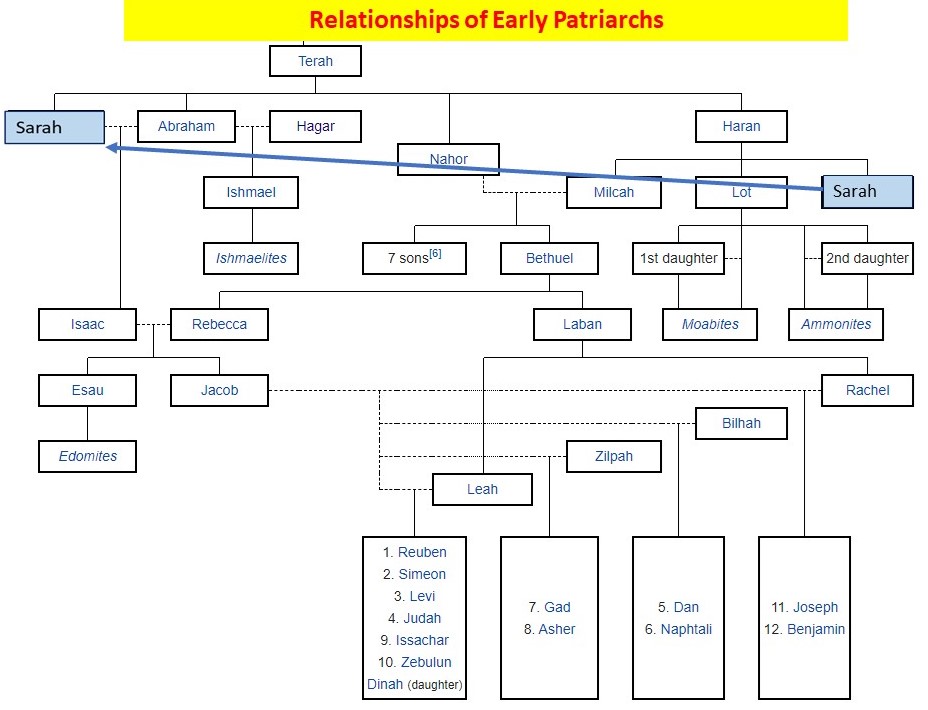
a. There is some debate on this point. Sarah was evidently either Abraham’s half-sister or his niece. Arguments can be put forth for both.
b. Isaac was a first cousin once removed of Rebekah.
c. Rachel and Leah were first cousins of Jacob.
16. How many trials can you find in these chapters that the Lord let Jacob endure in the process of his becoming a worthy heir to the blessings conferred upon Abraham and Isaac?
- Had to leave home to escape possible violence from Esau. (28:5)
- Deceived by Laban, who gave him Leah rather than Rachel as a wife (29:22-25)
- Had to work a total of 14 years for his two wives.
- Rachel, whom Jacob loved most, was initially barren (29:31)
- Laban attempts to defraud Jacob by removing all the ringstraked and spotted sheep and goats from the herd, so that there would supposedly be no more born of that appearance, which were the only kind Jacob was supposed to be able to keep. (30:25-36)
- Constantly subjected to Laban’s deceit and dishonesty (31:7)
- Laban tries to prevent Jacob’s return to his homeland (31:25-26)
- Feels stress at the prospect of Esau’s continuing anger towards him (32:7)
17. What instances or evidences can you find in these chapters of Jacob’s goodness which would qualify him for the covenant blessings?
- Obeyed his father (28:7)
- Erected a monument to commemorate his dream and revelation at Beth-el and made a covenant with God, including that of tithing (28:18-19)
- Rolled the stone from the well’s mouth and watered Laban’s flock (29:10)
- Was patient with Laban’s deceit and compliant with his wishes (30:29-33)
- Jacob offered a humble prayer to God. (32:9-12)
- Prepared a generous gift for Esau (32:13-18)
- The several visions and revelations recorded for Jacob in these chapters are evidence of the Lord’s acceptance of his worthiness.
18. What examples of human weakness can you find in Jacob in these chapters, showing that the Lord’s blessings can come not only to the sinless but to the repentant?
- Jacob was not as kind and sensitive as he could have been to Leah (29:30)
- He became angry with Rachel (30:2)
- He was superstitious with regard to mandrakes (an unidentified fruit which was supposed to increase the likelihood of conception) (30:14-15) and rods of green poplar and of the hazel and chestnut tree which were supposed to control the appearance of sheep or goats conceived next to them. (30:37-39)
- He got angry with Laban and contended with him (31:36)
19. What spiritual blessings, revelations, and tender mercies can you find Jacob receiving in these chapters?
- He received a great father’s blessing from Isaac as he left home, with a conferral of covenant blessings. (28:1-5)
- Dreamed of a ladder reaching to heaven with angels ascending and descending, and with the Lord above it, who spoke to him and promised him the same land and confirmed upon him the same covenant blessings previously promised to his father and grandfather (28:12-15). Joseph Smith taught that the “three principal rounds of Jacob’s ladder” represented the telestial, terrestrial, and celestial kingdoms. Elder Marion G. Romney taught that “Temples are to us all what Bethel was to Jacob.”
- Jacob met Rachel immediately, much like Abraham’s servant had met Rebekah, at a well near her father’s home. It was too easy to have been mere coincidence.
- Seven years of working for Rachel seemed like just a few days, because of his love for her (29:20)
- He was blessed to get Rachel as a wife just a week after he had expected to rather than have to work an additional seven years first.
- He eventually had a child with Rachel (30:22)
- The Lord humored Jacob’s superstitions by making his cattle more productive than Laban’s (30:39)
- The Lord told Jacob to return to the land of his fathers (31:3)
- An angel spoke to Jacob in a dream with a message from God. (31:11-13)
- Angels of God met Jacob on his way home (32:1-2)
- Jacob wrestled with an angel or divinely appointed human messenger, either physically or spiritually, and obtained a blessing, including a change of name to Israel 32:24-30). He evidently also saw God Himself face to face on the same occasion, but did not wrestle with Him.
20. How do you explain Laban’s receiving revelation from God when he himself was worshipping idols? (31:24, 30.)
There is much debate about what these “idols” were. It would seem to make little sense to send Jacob back to take a wife from Laban’s household if he were as idolatrous as those back home in Canaan. Randall Chase offers one possibility: “One scholar theorizes that these images were somehow tied in with the legal rights of inheritance. If this theory is correct, the possessor of the teraphim had the right to inherit the father’s property. This would explain why Rachel stole the images, since she believed her father had “stolen” her inheritance (see Genesis 31:14-16). It would also explain Laban’s extreme agitation over their loss and the severe penalty Jacob offered against the guilty party (see Genesis 31:32).”
21. Why would Jacob kiss Rachel the moment he met her? Why did he weep afterwards? (29:11)
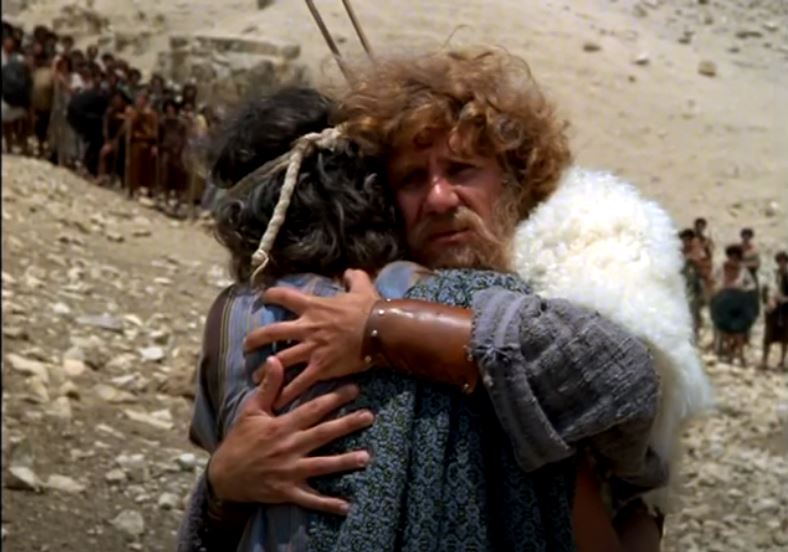
This was likely not the kiss of a passionate lover but of a relative greeting his first cousin, with a kiss on the cheek as is typical in many cultures today. His weeping was most likely for joy and relief at finding his uncle’s family, possibly coupled with the contemplation of his possible future with Rachel.
22. How sorry do you feel for Jacob when after waiting seven years to marry Rachel he found that Leah had been palmed off on him instead? Was this an appropriate fate for one who had pulled a similar trick on his own father and brother?
It is hard not to feel that Jacob had it coming!
23. What partially redeeming qualities do we see in Esau in this week’s reading?
- He finally (though belatedly) marries a wife who was a descendant of Ishmael, thinking it would get him back into his parents’ good graces.
- He forgives Jacob for having stolen his birthright and blessing.
- He is reluctant to accept the large gift Jacob offered him.
These are so good! Thank you for putting in the time to make them