This site is no longer being maintained. To see the latest version of this post, click on: Points to Ponder in Doctrine and Covenants 133-134
To accompany your Come Follow Me study for November 17-23
In addition to reading these two sections, you may enjoy reading any or all of the following:
- Chapter 53: Doctrine and Covenants 133 (churchofjesuschrist.org)
- Chapter 54: Doctrine and Covenants 134–36 (churchofjesuschrist.org)
- Of Governments and Laws (churchofjesuschrist.org)
- Joseph Smith’s Revelations, Doctrine and Covenants 133 (churchofjesuschrist.org)
- Joseph Smith’s Revelations, Doctrine and Covenants 134 (churchofjesuschrist.org)
You may also enjoy the following videos:
If you would like a Kahoot game related to these sections which you could use with your family or your class, click here https://create.kahoot.it/share/doctrine-and-covenants-133-134/1564d8fa-2e7c-453e-a4b4-700d3d742f6b.
Points to Ponder in Doctrine and Covenants 133-134
1. An “appendix” usually follows the main text of a book, but the “Appendix” to the D&C is followed by five other sections and two official declarations. Why then was it termed the “Appendix”?
2. Which other D&C section is most like D&C 133 in its spirit and purpose?
3. How would you answer the charge that D&C 133 is little more than a stringing together of quotes out of the Bible?
4. What do you consider the most personally currently applicable ideas from D&C 133? (Give the reference which stimulated each idea.)
4a. D&C 133:20 says that at the Savior’s coming, He “shall stand (1) upon the mount of Olivet, (2) and upon the mighty ocean,… (3) and upon the islands of the sea, (4) and upon the land of Zion.” How could He stand in so many places simultaneously?
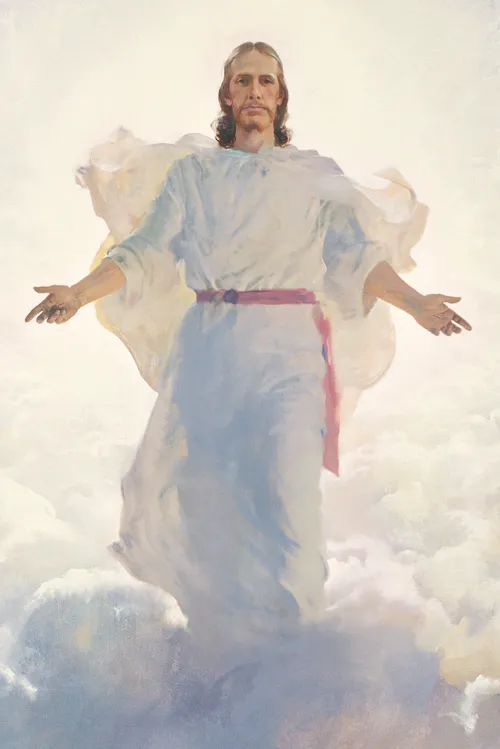
5. What part of the prophetic picture put forth by D&C 133 would appear to be out of chronological order? Why do you think so?
6. What would you guess the “rich treasures” might be which the lost tribes will bring to the children of Ephraim?

6a. What other passages in D&C 133 did you find especially memorable and inspiring?
7. D&C 134 was apparently authored by
a. Joseph Smith b. Oliver Cowdery c. W. W. Phelps d. Sidney Rigdon
8. How might 134:1 be reworded to make it more accurately convey what was meant?
9. What is probably the least currently applicable verse in 134?
10. If you hear someone breaking into your house and you discover the phone line has been cut, is it okay, according to D&C 134, to take the law into your own hands? What verse supports your answer?

11. Is there anything improper in having “In God We Trust” on our money and having prayers at governmental functions, according to D&C 134?

12. What does D&C 134 say about the compatibility of socialism or communism with the gospel?
13. In plain English, what responsibilities does the average citizen have to be involved in politics, according to D&C 134?

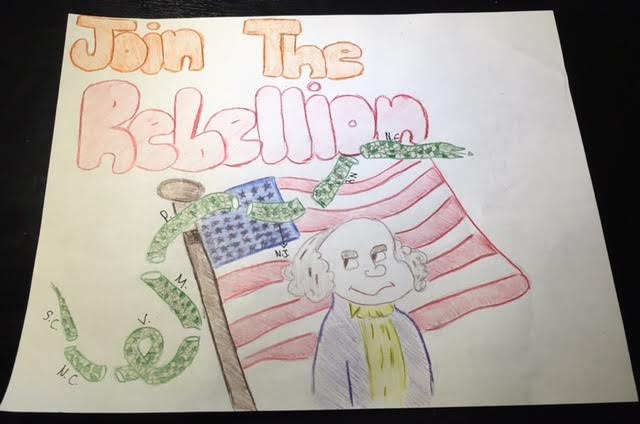
14. Would Latter-day Saints ever be justified in participating in a revolution, according to D&C 134?
15. What law enforcement responsibilities does D&C 134 say the average citizen has?

16. Would it be appropriate for a Church membership council to impose a fine on a wayward member as part of the conditions of his repentance and reinstatement to full fellowship in the Church?
Possible Answers to Points to Ponder in Doctrine and Covenants 133-134
1. An “appendix” usually follows the main text of a book, but the “Appendix” to the D&C is followed by five other sections and two official declarations. Why then was it termed the “Appendix”?
This was the “Appendix” to the 1833 edition, but there have been several items added since which have been put later in the D&C, perhaps because they were written later or were deemed to be even more of a postscript than D&C 133 was.
2. Which other D&C section is most like D&C 133 in its spirit and purpose?
1
3. How would you answer the charge that D&C 133 is little more than a stringing together of quotes out of the Bible?
You could likewise say a temple was no more than the putting together of familiar bricks, mortar, and wood, but the effect would be no less beautiful. Section 133 is much more than a stringing together of Biblical passages, but it does cite many such passages and helps us understand how ancient prophecies are to be fulfilled in this last dispensation.
4. What do you consider the most personally currently applicable ideas from D&C 133? (Give the reference which stimulated each idea.)
Your choice. I might suggest the following:
- “Go ye out of Babylon”–i.e., be different from the world (v. 5)
- “Prepare yourselves for the great day of the Lord.” (v. 10)
- “Prepare ye the way of the Lord”–there is a lot of work to do for us to get the world ready for the Second Coming (v. 17)
- “Speak often one to another”–there is great value in our meeting together and sharing our testimonies and insights with each other (v. 6)
4a. D&C 133:20 says that at the Savior’s coming, He “shall stand (1) upon the mount of Olivet, (2) and upon the mighty ocean,… (3) and upon the islands of the sea, (4) and upon the land of Zion.” How could He stand in so many places simultaneously?
There appear to be at least three possible explanations here:
- The passage may be simply symbolic of the universal influence of Christ’s coming.
- With His divine powers of locomotion, it could be that He indeed in rapid succession stands physically in all of the mentioned places.
- In a world in which a Disneyland can produce holograms and in which General Conference can be seen everywhere at once, it should not be too difficult to conceive that the Lord could “broadcast” a live image of His coming to all parts of the globe. The scriptures say that “all flesh shall see me together.” (D&C 101:23.) And just as Jesus allowed all of those assembled at the temple in Bountiful to individually touch His hands and feet, it is not too far-fetched to even speculate that He could through celestial technology provide a comparable experience for His latter-day disciples at His coming, though the scriptures nowhere say that is mandatory.
5. What part of the prophetic picture put forth by D&C 133 would appear to be out of chronological order? Why do you think so?
Probably verses 26-34, speaking of the return of the Ten Tribes, which is discussed after earlier verses relating to the Second Coming, but which will apparently actually occur before that time. Otherwise, there would be no “enemies” left around to become a prey to them.
6. What would you guess the “rich treasures” might be which the lost tribes will bring to the children of Ephraim?
Probably their scriptures, including the record of the ministry of Jesus Christ among them following His resurrection. It is hard to think of anything else they could bring of comparable value.
6a. What other passages in D&C 133 did you find especially memorable and inspiring?
Your choice. For me, two of them were the following, both of which speak of the great future which awaits us:
- 45 For since the beginning of the world have not men heard nor perceived by the ear, neither hath any eye seen, O God, besides thee, how great things thou hast prepared for him that waiteth for thee.
- 56 And the graves of the saints shall be opened; and they shall come forth and stand on the right hand of the Lamb, when he shall stand upon Mount Zion, and upon the holy city, the New Jerusalem; and they shall sing the song of the Lamb, day and night forever and ever.
7. D&C 134 was apparently authored by
a. Joseph Smith b. Oliver Cowdery c. W. W. Phelps d. Sidney Rigdon
8. How might 134:1 be reworded to make it more accurately convey what was meant?
“We believe that the principle of government was instituted ….” or “We believe some governments were instituted ….” We would certainly not suggest that all earthly governments have a divine origin.
9. What is probably the least currently applicable verse in 134?
I would suggest v. 12.
10. If you hear someone breaking into your house and you discover the phone line has been cut, is it okay, according to D&C 134, to take the law into your own hands? What verse supports your answer?
Yes. V. 11 upholds the right of self-defense and defense of property.
11. Is there anything improper in having “In God We Trust” on our money and having prayers at governmental functions, according to D&C 134?
D&C 134 certainly doesn’t say so. In v. 9 it says that a mingling of church and state would be improper if it favored one denomination over another, but all religions presumably claim to trust in God, and saying so on our money causes harm to no one, nor does a prayer at a governmental function.
12. What does D&C 134 say about the compatibility of socialism or communism with the gospel?
V. 2 highlights the importance of each individual’s free exercise of conscience and the right and control of private property, which would be severely restricted under socialism or communism.
13. In plain English, what responsibilities does the average citizen have to be involved in politics, according to D&C 134?
V. 3 says we all have an obligation to help find and support good candidates for office.
14. Would Latter-day Saints ever be justified in participating in a revolution, according to D&C 134?
According to v. 5, if and only if their government ceased to protect them in their “inherent and inalienable rights.” The Book of Mormon makes clear that the Lord did justify and support the revolutions of several of the American nations against their mother countries in Europe.
15. What law enforcement responsibilities does D&C 134 say the average citizen has?
Verse 8 says we all “should step forward and use [our] ability in bringing offenders … to justice.” That would at the very least include calling the police when we become aware of a crime in progress or the identity of someone who has committed a crime and cooperate with the police in their apprehension.
16. Would it be appropriate for a Church membership council to impose a fine on a wayward member as part of the conditions of his repentance and reinstatement to full fellowship in the Church?
D&C 134:10 says no.