
This site is no longer being maintained. To see the latest version of this post, click on: Points to Ponder in The Family: A Proclamation to the World
To accompany your Come Follow Me study for December 15-21
In addition to reading the Proclamation this week, you will want to:
- Read the historical resource material at https://www.churchofjesuschrist.org/study/history/doctrine-and-covenants-historical-resources/51?lang=eng
You may also enjoy the following videos:
If you would like a Kahoot game related to the Proclamation which you could use with your family or your class, click here https://create.kahoot.it/share/the-family-a-proclamation-to-the-world/db609b81-e291-47f0-a56f-38b9b6835c36.
Points to Ponder in The Family: A Proclamation to the World
1. Why would President Oaks have said, “I believe our attitude toward and use of the family proclamation is [a test] for this generation”?

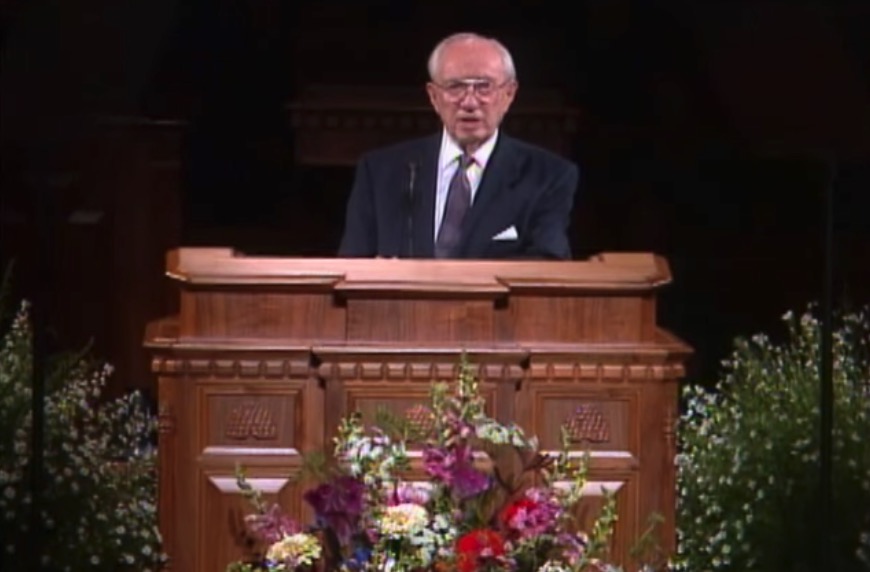
2. Why would President Hinckley have first presented the Proclamation in a women’s meeting rather than in a regular General Conference session?
3. Wherein does the world most disagree with the principles of the family proclamation?
4. What unique Latter-day Saint doctrines underlie our positions on marriage and family?
5. What are some statistics you could cite to substantiate the claim that marriage and family life has suffered significantly in recent years and decades?

6. How would you answer a child who wanted to know why our Church discriminates against LGBTQ people, and what would be wrong with a marriage between any two people who truly loved each other?
7. What points in the Proclamation did you personally feel to underline?
8. Since the Church adamantly opposes same sex marriage, why in 2019 did it begin allowing the display of same sex marriages in the Church-operated FamilySearch family tree?
9. What personal experiences have you had to increase your testimony of the divine inspiration behind the family proclamation?
10. Does the inclusion of a study of the family proclamation in a Doctrine and Covenants course mean that the proclamation will one day be part of the D&C?
Possible Answers to Points to Ponder in The Family: A Proclamation to the World
1. Why would President Oaks have said, “I believe our attitude toward and use of the family proclamation is [a test] for this generation”?
In view of the world’s opposition to many of its principles, it would test whether Church members would follow the world or the words of the living prophets and risk the ridicule and even persecution of the world.
2. Why would President Hinckley have first presented the Proclamation in a women’s meeting rather than in a regular General Conference session?
Probably to honor the sisters of the Church and acknowledge their unique role in the preservation of family values.
3. Wherein does the world most disagree with the principles of the family proclamation?
Probably in its acceptance of cohabitation outside of marriage and its acceptance of same sex marriage.
4. What unique Latter-day Saint doctrines underlie our positions on marriage and family?
- Our belief that God Himself lives in a family unit and that we have a Mother in Heaven
- Our belief in a pre-mortal life, in which we existed as male or female spirits literally begotten by heavenly parents
- Our belief in the potentially eternal nature of marriage and the family unit and the opportunity for eternal increase, with the possibility of becoming as our heavenly parents
- Our belief in the reality of modern revelation through living prophets
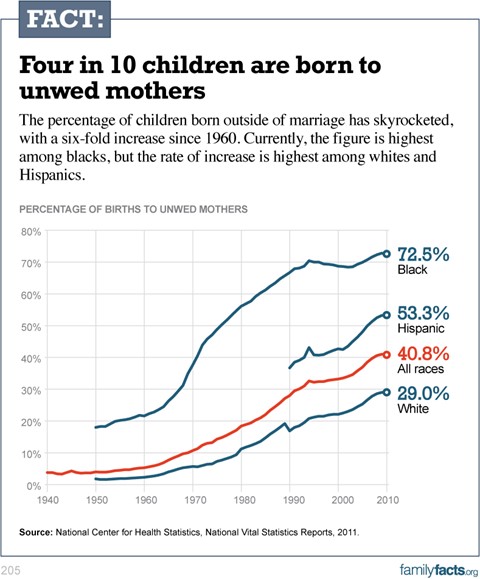
5. What are some statistics you could cite to substantiate the claim that marriage and family life has suffered significantly in recent years and decades?
Here are just a few examples.
- Since 1965:
- The percent of children in the US born to unwed mothers has increased from 5% to 40%.
- 80% of recent marriages in the US were preceded by cohabitation.
- While child neglect and other forms of child abuse have declined some since the 1990’s, there were still an estimated 558,899 children who were victims of abuse and neglect in 2022
- Depression and other psychological disorders among adolescents remains high and has recently worsened. In 2023, nearly 1 in 5 (18%) youth ages 12-17 had at least one major depressive episode in the past year. The percentage of high schoolers reporting persistent feelings of sadness or hopelessness spiked 10 percentage points from 30% in 2013 to 40% in 2023.
- Domestic violence against women has declined some since the 1990’s, but approximately 22% of U.S. women still report experiencing intimate partner violence during their lifetime, and it remains a severe public health problem.
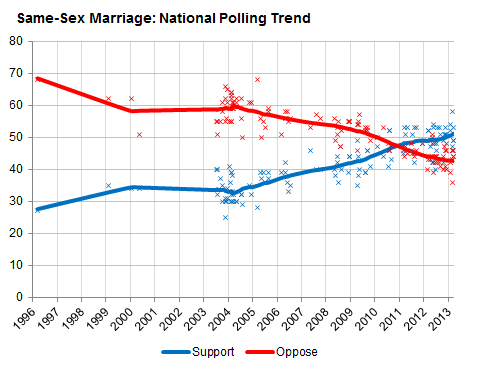
- Whereas same sex marriage was everywhere illegal until 1998, it is now legal in every state of the US and in many countries throughout the world.
- Whereas 85% of children lived with their married birth parents in the 1960’s, only 60% do so now.
- Current research generally finds that parental separation (divorce or breakup of a cohabiting union) increases a child’s risk of adverse outcomes by a factor typically ranging from 1.5 to 2 across broad categories of problems, though the risk can be much higher for specific, severe outcomes. For example:
- Children of divorce earn 13% less in their late twenties than peers from intact families.
- They have an 8% lower probability of completing high school; 12% lower probability of college attendance.
- Approximately 25% of youth from divorced families experience serious social or emotional problems, compared to 10% from intact families
- Children of divorce are 40% more likely to spend time in jail and 45% more likely to suffer premature death (from a large, longitudinal study).
- Children of divorce are 60% more likely to experience a teenage pregnancy.
- The US birthrate has declined from 24 per 1000 in 1950 to 10 per 1000 in 2021.
- The total fertility rate (number of children per woman over a lifetime) i below the replacement level of 2.1 in every state in the US. Utah, which used to lead the nation in total fertility rate, is now in 10th place.
6. How would you answer a child who wanted to know why our Church discriminates against LGBTQ people, and what would be wrong with a marriage between any two people who truly loved each other?
The Church actually adamantly opposes discrimination toward LGBTQ people in housing, employment, and other matters. However, as the key to eternal happiness and progress is a marriage between a man and a woman, with eternal increase, the Church must clearly teach its members that any other course can lead only to unhappiness in the long run.
7. Since the Church adamantly opposes same sex marriage, why in 2019 did it begin allowing the display of same sex marriages in the Church-operated FamilySearch family tree?
Gemini explains it as follows:
This policy change by FamilySearch, which was fully implemented around 2019, was driven by a commitment to genealogical accuracy and comprehensive record-keeping, while simultaneously maintaining a clear distinction from the religious doctrine of The Church of Jesus Christ of Latter-day Saints (LDS Church).
Here are the primary reasons for the change, based on official statements and reporting:
1. Goal of Comprehensive and Accurate Genealogy
- The World’s Families: FamilySearch states that its primary goal is “to capture, store, and provide records and an accurate genealogy that represents past, present, and future families of the world.”
- Documentation, Not Endorsement: The organization acknowledges that same-sex relationships, including legally recognized marriages and adoptions, are a documented part of the human family and appear in civil, ecclesiastical, and public records. The decision to include them is seen as an effort to document reality, not to make a judgment or endorsement regarding the legitimacy or character of the relationship.
2. Distinction Between Genealogy and Temple Ordinance
This is the most crucial point for the LDS Church:
- No Change in Doctrine: The Church explicitly stated that this change is not a change in doctrine. The Church continues to teach that marriage is between a man and a woman.
- Separate Systems: FamilySearch operates as a massive, non-denominational genealogical database. The documentation of a same-sex marriage in the Family Tree does not allow for the submission of temple sealing ordinances (the religious practice of marrying for eternity) for that couple. Temple ordinances are strictly limited to opposite-sex couples, consistent with Church doctrine.
3. Industry Standards and User Needs
- Competing Platforms: FamilySearch was among the last major genealogy sites to allow for the recording of same-sex relationships, with platforms like Ancestry.com and Findmypast making the change years earlier. To remain competitive and relevant to the global genealogy community, adopting this feature was necessary.
- Serving All Users: FamilySearch is a free, global resource used by both members of the LDS Church and non-members. This change accommodates the needs of genealogists with LGBTQ+ relatives and ancestors, allowing them to accurately track their full family history.
In essence, The Church of Jesus Christ of Latter-day Saints made the pragmatic decision to separate its non-religious function (genealogical data preservation) from its religious doctrine (eternal marriage), ensuring that FamilySearch remains the world’s most comprehensive and accurate historical record-keeping tool.
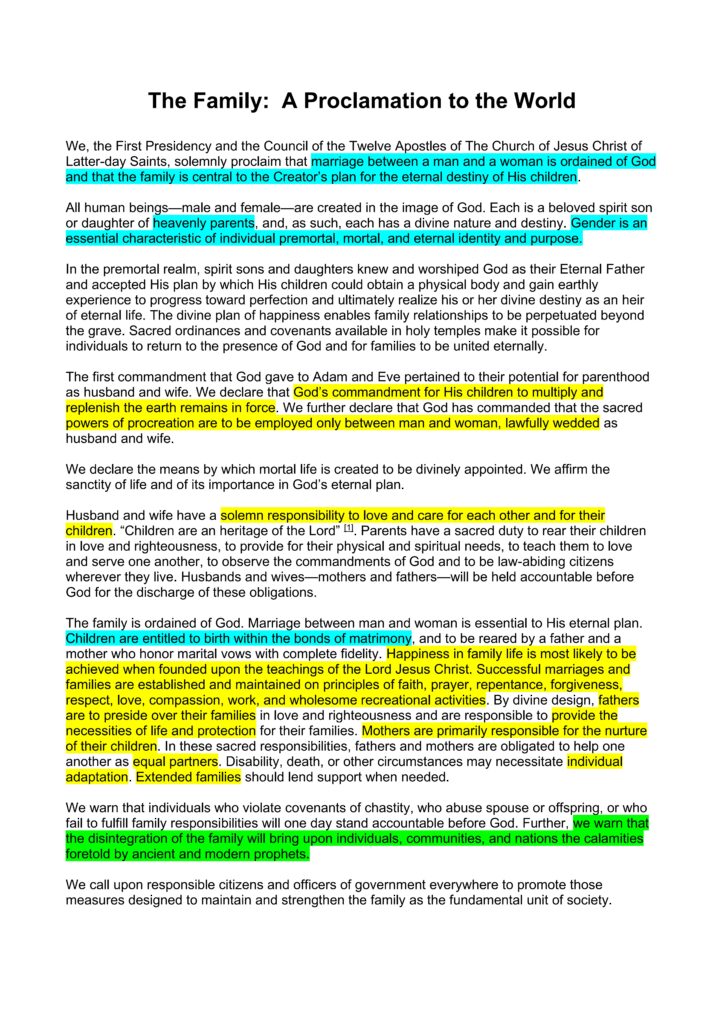
8. What points in the Proclamation did you personally feel to underline?
Your choice. Here is what I did:
9. What personal experiences have you had to increase your testimony of the divine inspiration behind the family proclamation?
My personal experience confirms the Proclamation’s assertion that “Happiness in family life is most likely to be achieved when founded upon the teachings of the Lord Jesus Christ.” Experience also teaches me that “Successful marriages and families are established and maintained on principles of faith, prayer, repentance, forgiveness, respect, love, compassion, work, and wholesome recreational activities.” And I have a testimony that father and mother are happiest and succeed best when they work as “equal partners” in family matters and in raising and nurturing their children. My greatest happiness has come from my family, and I view that happiness here as a foretaste of that eternal happiness God has prepared for His faithful children.

10. Does the inclusion of a study of the family proclamation in a Doctrine and Covenants course mean that the proclamation will one day be part of the D&C?
Who knows? It could well make locating the Proclamation easier for some members, and it surely as a revelatory document is on a par with much that is already included in the Doctrine and Covenants. It must be remembered, however, that the Doctrine and Covenants was never intended to be a comprehensive collection of all revelations communicated in this dispensation. So, it could well be that the Church will continue to leave the D&C as it is, while leaving the family proclamation easily available in the Gospel Library.