This site is no longer being maintained. To see the latest version of this post, click on: Points to Ponder in Doctrine and Covenants 89-92
To accompany your Come Follow Me study for August 18-24
In addition to reading these sections you may want to read:
- Chapter 35: Doctrine and Covenants 89–92 (churchofjesuschrist.org)
- Joseph Smith’s Revelations, Doctrine and Covenants 89 (churchofjesuschrist.org)
- Joseph Smith’s Revelations, Doctrine and Covenants 90 (churchofjesuschrist.org)
- Joseph Smith’s Revelations, Doctrine and Covenants 91 (churchofjesuschrist.org)
- Joseph Smith’s Revelations, Doctrine and Covenants 92 (churchofjesuschrist.org)
- Saints, 1:166–68.
- Gospel Topics, “Word of Wisdom,” topics.ChurchofJesusChrist.org;
- “The Word of Wisdom,” Revelations in Context, 183–91;
- “Official Church Statement” on the Word of Wisdom at https://newsroom.churchofjesuschrist.org/article/statement-word-of-wisdom-august-2019
You may also enjoy the following videos:
If you would like a Kahoot game related to these sections which you could use with your family or your class, click here: https://create.kahoot.it/share/doctrine-and-covenants-89-92/dd2bc333-8c6e-4758-82df-0b480b111ae7.
Points to Ponder in Doctrine and Covenants 89-92
1. Use of which of the following do you consider sufficiently contrary to the Word of Wisdom that it should keep one out of the temple? (Select all that apply.)
- chewing tobacco
- filter cigarettes
- electronic cigarettes
- NoDoz tablets (containing caffeine)
- 1 cup of coffee per week
- 5 cans of Coca Cola per day
- crack cocaine
- marijuana, if you don’t inhale
- hot chocolate
- excessive consumption of meat
- insufficient consumption of fruits, vegetables, and grains
- herb tea
- rum flavored ice cream
- use of artificial flavorings containing alcohol
- an occasional glass of wine on special occasions
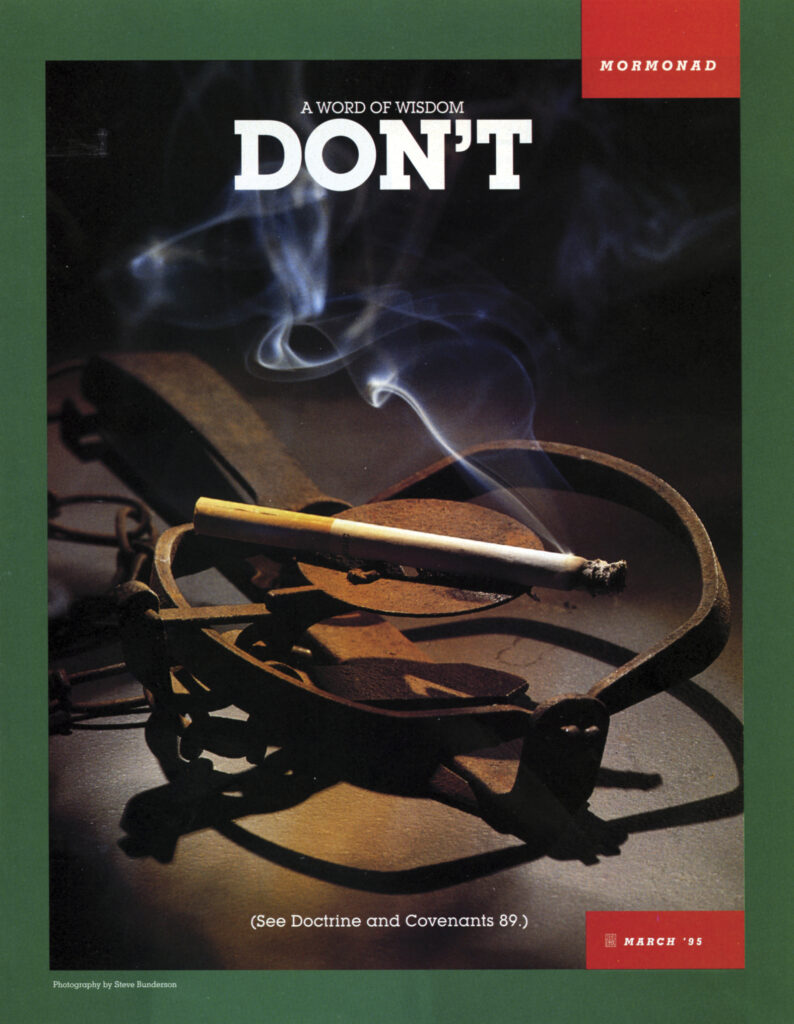
2. Why will violation of some parts of the Word of Wisdom keep you out of the temple when disregard of other parts won’t?
3. What evidence can you cite from personal experience or observation of the “evils and designs … of conspiring men” in promoting products contrary to the Word of Wisdom?

4. Why was the Word of Wisdom considered to be merely counsel or a suggestion at first but is now considered to be a commandment, in spite of 89:2?
5. What do you consider the greatest promise in D&C 89 for obedience to the Word of Wisdom?
6. How do you explain the fact that some who keep the Word of Wisdom still get weary when they run, despite 89:20?

7. What would you say to one who asked, “Do you mean to tell me the Lord would keep me out of the celestial kingdom just for an occasional cup of coffee or sip of beer?”

8. What would you say to one who argued that one glass of tea wasn’t nearly as harmful to the body as excessive consumption of fat?

9. What would you respond to one who quoted Paul’s counsel to Timothy, “Take a little wine for thy stomach’s sake” (1 Tim. 5:23) and his words to the Roman saints that “there is nothing unclean of itself” and that the “kingdom of God is not meat and drink; but righteousness, and peace, and joy in the Holy Ghost”? (Romans 14:14, 17.)

9a. Does the prohibition against “hot drinks” include hot chocolate? Hot soup? What about iced tea?

10. What would you tell a friend who insisted he would love to join the Church and had tried repeatedly with all his heart to quit smoking and drinking but hadn’t succeeded in leaving either?
11. How do you reconcile the instructions in 90:25 to “let your families be small” with the counsel of other prophets to have large families?

12. How do you reconcile 90:37 with the fact that the early saints were driven out of Missouri?
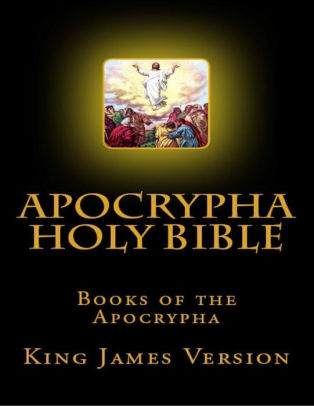
13. What would you tell a friend who wanted to be able to say he had read all of the standard works but wasn’t sure if that meant he needed to read the Apocrypha?
13a. What are some specific examples we can point to of probable false or inaccurate information in the Apocrypha?
13b. What are some examples of probably true and useful material in the Apocrypha that is supportive of Latter-day Saint doctrine?
14. Can you think of any benefit we get from having section 92 in the D&C? What in your personal experience does this section most resemble?
15. What passage in these sections indicates Joseph Smith will still preside over this dispensation even in the next life?
16. Which passage foreshadows the eventual establishment of the Missionary Training Center (MTC)?

17. Which passage could appropriately be posted on the door of a teenager’s messy bedroom.

18. Which passage reassures us that everything will turn out okay for the righteous?
Possible answers to Points to Ponder in Doctrine and Covenants 89-92
1. Use of which of the following do you consider sufficiently contrary to the Word of Wisdom that it should keep one out of the temple? (Select all that apply.)
My own answers are indicated below in red:
- chewing tobacco
- filter cigarettes
- electronic cigarettes
- NoDoz tablets (containing caffeine)
- 1 cup of coffee per week
- 5 cans of Coca Cola per day
- crack cocaine
- marijuana, if you don’t inhale
- hot chocolate
- excessive consumption of meat
- insufficient consumption of fruits, vegetables, and grains
- herb tea
- rum flavored ice cream
- use of artificial flavorings containing alcohol
- an occasional glass of wine on special occasions
2. Why will violation of some parts of the Word of Wisdom keep you out of the temple when disregard of other parts won’t?
Because living prophets have so determined—probably because drinking alcohol or smoking a cigarette are more flagrant and willful acts of disobedience than is failure to consume enough vegetables or eating too much meat.
But the real goal isn’t simply to barely qualify to get into the temple but to constantly qualify to have the Spirit of the Lord as a companion. Paul gave a good rule in his counsel concerning whether or not it was okay to eat meat which had been “cooked” when sacrificed to pagan gods and thereafter offered for sale at a discount in the markets. The early saints argued the pros and cons just as vociferously as we sometimes debate the use of cola drinks. Paul’s verdict was that technically there was nothing wrong with eating the cheap meat. But, he added, if you think it’s wrong and do it anyway, then in your case it is a sin. (Romans 14; 1 Corinthians 8.)
The same standard might be applied to several of the items on the above list. That’s the essence of what Paul means when on other occasions he teaches we are saved by faith, not by works. In other words, it’s not the ingesting of physically harmful substances that is so bad. It’s the attitude of disobedience in the heart of the one doing it, if his intention is to get as close as he can to the “edge of the cliff” without falling over. Paul also invites us to consider the effect our decision might have on those with weak testimonies who think we, who should be their examples, are making a decision they think is wrong. In other words, if I were to decide that drinking Coke was not a violation of the Word of Wisdom, I might still want to consider the effect my drinking it would have on my class of teenagers who had been taught otherwise by their parents and who would consider me a hypocrite if they saw me drinking it and would therefore be less likely to take seriously anything else I might try to teach them.
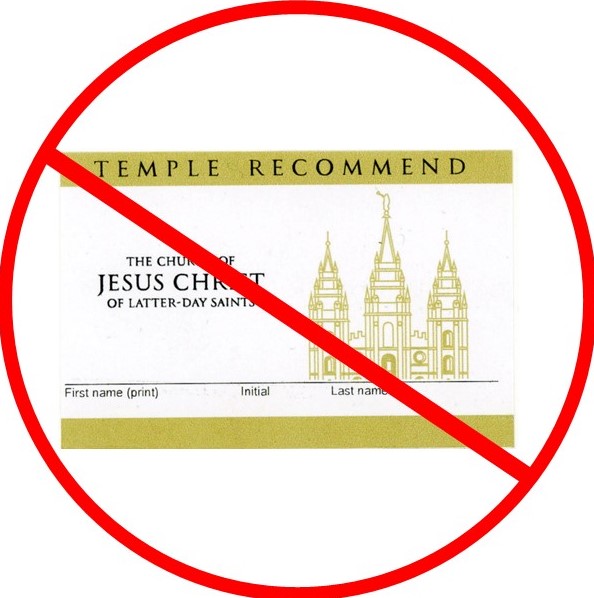
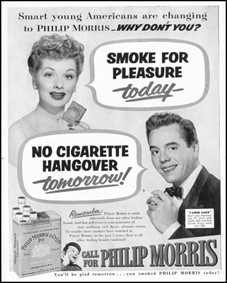
3. What evidence can you cite from personal experience or observation of the “evils and designs … of conspiring men” in promoting products contrary to the Word of Wisdom?
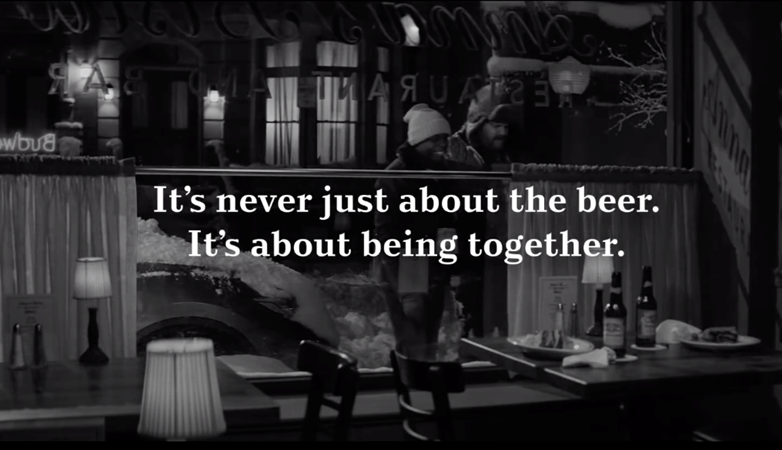
Your choice. Promoters through the years have produced countless clever ads to make it appear that those who smoke or drink are more attractive or that use of those substances brings happiness, with no negative consequences. Most of them have to have known better. Here are samples from both the past and the present:


4. Why was the Word of Wisdom considered to be merely counsel or a suggestion at first but is now considered to be a commandment, in spite of 89:2?
When the Lord first revealed D&C 89, many of the members, including leaders, of the Church used now-forbidden substances habitually. It was an indication of the Lord’s patience and mercy that He allowed a transition period.
But if properly understood, obedience to the Word of Wisdom may be considered to have always been expected of faithful Latter-day Saints. The Lord had declared in D&C 58: “But he that doeth not anything until he is commanded, and receiveth a commandment with doubtful heart, and keepeth it with slothfulness, the same is damned.” (D&C 58:28-29.)
Stephen C. Harper, in his Making Sense of the Doctrine and Covenants, further explains:
“When exactly did the Word of Wisdom become a commandment? The answer depends on what one means by commandment. If one means, when did the Lord express his will that Saints obey the Word of Wisdom, then the answer is, the day He gave it, February 27, 1833. The Lord revealed wisdom to the Saints and expected them to obey it, from the beginning, as best they could. Some claim the Word of Wisdom became binding in 1851, when Brigham Young asked for and received the Saints’ sustaining vote to obey it. President Young himself sometimes chewed tobacco to dull the pain of broken teeth. Some claim the Word of Wisdom became binding in the 1880s, when President John Taylor re-emphasized obedience. Still others claim the Word of Wisdom finally became binding when President Heber J. Grant made obedience to it a requirement for obtaining a temple recommend.
“If no single date can be established when the Lord made obedience to the Word of Wisdom binding upon Latter-day Saints, his merciful forewarning and longsuffering with weakness is clear. The Lord’s prophets have consistently applied the principle of agency, always urging obedience yet making allowances for those who were acted upon by powerful substances before they had enough knowledge to act intelligently for themselves. President Grant taught that obedience to the Word of Wisdom resulted from love for God: “If you love God with all your heart, might, mind and strength, does he need to command?”
5. What do you consider the greatest promise in D&C 89 for obedience to the Word of Wisdom?
Probably the “wisdom and great treasures of knowledge,” especially that which comes through the Spirit due to obedience. That has to outrank the ability to “run and not be weary and walk and not faint,” as desirable as that is.
6. How do you explain the fact that some who keep the Word of Wisdom still get weary when they run, despite 89:20?
The promise is obviously intended as a general principle, not an individual guarantee in each specific case.
7. What would you say to one who asked, “Do you mean to tell me the Lord would keep me out of the celestial kingdom just for an occasional cup of coffee or sip of beer?”
One of the prophets responded, “No, but he will keep you out for rebellion.” We might turn the question around: “Would you miss out on the celestial kingdom just so you could drink an occasional cup of coffee, etc.?”
8. What would you say to one who argued that one glass of tea wasn’t nearly as harmful to the body as excessive consumption of fat?
That may be true, but it’s a great deal more harmful to the spirit, as prophets have determined that one will keep us from a temple recommend, and the other will not.
9. What would you respond to one who quoted Paul’s counsel to Timothy, “Take a little wine for thy stomach’s sake” (1 Tim. 5:23) and his words to the Roman saints that “there is nothing unclean of itself” and that the “kingdom of God is not meat and drink; but righteousness, and peace, and joy in the Holy Ghost”? (Romans 14:14, 17.)
The Word of Wisdom was not a law in Paul’s day, of course. We focus on the latest word from the Lord, not the earliest. In Romans, Paul was talking about the dietary regulations of the law of Moses, not the not-yet-existent Word of Wisdom.
9a. Does the prohibition against “hot drinks” include hot chocolate? Hot soup? What about iced tea?
Gemini tells us: “Almost immediately after the revelation was given in 1833, Joseph Smith and other early Church leaders clarified that “hot drinks” referred specifically to coffee and tea. Historical sources indicate that the term “hot drinks” was an idiom in the New England area at the time, and it was commonly understood to mean these two beverages.
“The interpretation has never been about the literal temperature of the drink. While some early discussions may have briefly touched on the idea of literally hot beverages, this was not the lasting interpretation. Therefore, consuming hot chocolate, soups, or other hot, non-caffeinated beverages is not considered a violation of the Word of Wisdom.
“The prohibition applies to all forms of coffee and tea, including decaffeinated versions, iced tea, and drinks that contain coffee or tea as an ingredient (e.g., lattes, mochas, and green tea). Herbal teas, which are not made from the leaves of the Camellia sinensis plant, are generally considered permissible.”
10. What would you tell a friend who insisted he would love to join the Church and had tried repeatedly with all his heart to quit smoking and drinking but hadn’t succeeded in leaving either?
He hasn’t tried hard enough. D&C 89 assures us that the law is adapted to the weakest of all who have any right to be called saints. It may be that without divine help we cannot always break longstanding habits, but we haven’t done our best until we have sought and obtained that help.
11. How do you reconcile the instructions in 90:25 to “let your families be small” with the counsel of other prophets to have large families?
This meant not to take on a lot of permanent undeserving free boarders who would deplete needed resources. It had no reference to curtailing the birth of children.
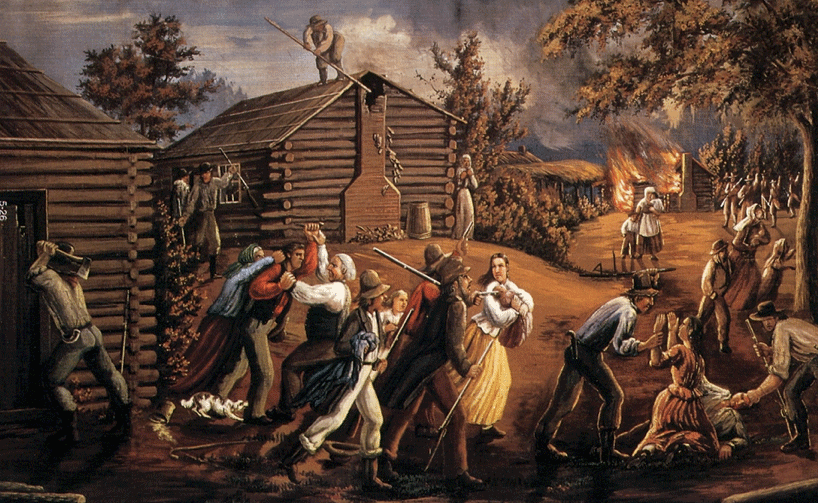
12. How do you reconcile 90:37 with the fact that the early saints were driven out of Missouri?
“Zion” is still appointed to be centered in Missouri someday. Not Zion but the Latter-day Saints were driven from Missouri.
13. What would you tell a friend who wanted to be able to say he had read all of the standard works but wasn’t sure if that meant he needed to read the Apocrypha?
If his goal were simply to be able to say he had read them all, I’d tell him to forget the Apocrypha. But if he were so spiritually mature that he’d be eager for any additional holy writ, and if he had read the rest of the standard works, I’d tell him basically what the Lord told Joseph Smith. The Apocrypha has some great material, much of which is true, and his life could be blessed by reading it with the Spirit. The average Latter-day Saint, however, would probably benefit more from rereading the latest general conference addresses than from spending additional time in the Apocrypha.
13a. What are some specific examples we can point to of probable false or inaccurate information in the Apocrypha?
ChatGPT offers the following helpful examples:
If one were looking for examples of “things that are not true” or human interpolations in the Apocrypha that Latter-day Saints might point to, a few stand out:
1. Historical Anachronisms and Legendary Embellishments
- Tobit
- Tobit claims to have lived during the deportation of Israel under Shalmaneser (8th century B.C.) and during the destruction of Nineveh (7th century B.C.)—which would make him improbably long-lived.
- The story also features fanciful elements, like a fish whose organs drive away demons (Tobit 6:6–9). These look like folktale motifs more than inspired history.
- Judith
- Judith’s story includes a supposed Assyrian general “Holofernes” serving Nebuchadnezzar—who was actually Babylonian, not Assyrian (Judith 2:1).
- The entire book is full of patriotic drama but riddled with historical inaccuracies, suggesting it’s more a moral tale than literal history.
2. Doctrinal Confusion
- 2 Maccabees 12:43–45
- Teaches that prayers and offerings for the dead help atone for their sins. Catholics see this as support for purgatory, but Latter-day Saints generally reject the idea of purchasing forgiveness or posthumous indulgences. (LDS doctrine of vicarious ordinances is different—authorized by revelation, not by offerings of money or sacrifices.)
- This is a prime example of doctrine Latter-day Saints would see as a later interpolation, inconsistent with revealed truth.
- Wisdom of Solomon 8:19–20
- Speaks of a “good soul” entering into a “body undefiled.” Some have taken this to imply a kind of preexistence—but the passage is ambiguous and Hellenistic in flavor. It may be philosophy rather than revelation, and it blends Platonic ideas with Jewish thought.
3. Fanciful Additions to Canonical Stories
- Bel and the Dragon (Daniel additions)
- The story of Daniel slaying a dragon with cakes of pitch and hair (Bel and the Dragon 1:23–27) has the feel of legend rather than sacred history.
- Latter-day Saints would likely count this as a “human addition” rather than true prophetic record.
- Susanna (Daniel addition)
- A courtroom drama where Daniel exposes two corrupt elders by clever cross-examination. It teaches a good moral, but it looks more like a didactic tale than authentic Danielic history.
4. Teachings that Contradict Biblical or Revealed Truth
- Ecclesiasticus (Sirach) 25:24
- States that “from a woman sin had its beginning, and because of her we all die.”
- This echoes a harsh view of Eve as the sole cause of humanity’s fall, inconsistent with Latter-day Saint teachings that see the Fall as a necessary and positive step in God’s plan (2 Nephi 2:25).
13b. What are some examples of probably true and useful material in the Apocrypha that is supportive of Latter-day Saint doctrine?
ChatGPT offers the following:
Here are examples of passages in the Apocrypha that Latter-day Saints might see as consistent with revealed doctrine:
1. Pre-Mortal Existence
- Wisdom of Solomon 8:19–20 “I was a witty child, and had a good spirit. Yea rather, being good, I came into a body undefiled.”
Latter-day Saints can read this as a hint of the doctrine that our spirits existed before birth (cf. Abraham 3:22–23; Jeremiah 1:5).
2. God Created All Things by His Word
- 2 Esdras 6:38 “O Lord, thou spakest on the first day of creation, ‘Let heaven and earth be made’; and thy word hath accomplished the work.”
This harmonizes with John 1:1–3 and Moses 2, showing creation by divine command through the Word (Christ).
3. Resurrection and Immortality
- 2 Maccabees 7:9, 14, 23 (martyrs’ testimony) “The King of the universe will raise us up to an everlasting renewal of life, because we have died for his laws.”
“…it is better to be killed by men, yet to look for hope from God to be raised up again by him.”
“…the Creator of the world… will in his mercy give life and breath back to you again.”
This echoes Latter-day Saint belief in a literal resurrection through Christ. - Wisdom of Solomon 3:1–4 “The souls of the righteous are in the hand of God… In the sight of the unwise they seemed to die… but they are in peace.”
A clear affirmation of life after death, resonant with Alma 40 and Mosiah 2:41.
4. Agency and the Purpose of the Fall
- 2 Esdras 7:57 “For God hath given strait commandment to such as came, what they should do to live, even as they came, and what they should observe to avoid punishment.”
This reflects the principle of agency and accountability, central to LDS doctrine (2 Nephi 2:27).
5. Righteousness Greater Than Ritual
- Ecclesiasticus (Sirach) 35:3 “To depart from wickedness is a thing pleasing to the Lord; and to forsake unrighteousness is a propitiation.”
That sounds very much like Isaiah 1:11–17 and the Book of Mormon’s teaching that God desires righteousness over empty sacrifice.
6. Mercy, Almsgiving, and Prayer
- Tobit 12:8–9 “Prayer is good with fasting and alms and righteousness… For alms doth deliver from death, and shall purge away all sin. Those that exercise alms and righteousness shall be filled with life.”
While the phrasing sounds almost transactional, the spirit of combining fasting, prayer, and generosity resonates with Christ’s Sermon on the Mount (Matthew 6).
7. God’s Nearness to His People
- Wisdom of Solomon 1:7 “For the Spirit of the Lord filleth the world: and that which containeth all things hath knowledge of the voice.”
This harmonizes with LDS teachings of the Light of Christ filling the immensity of space (D&C 88:12–13).
14. Can you think of any benefit we get from having section 92 in the D&C? What in your personal experience does this section most resemble?
D&C 92 is a good reminder that not everything in the Doctrine and Covenants is of equal value and current applicability. It is more like a mission call or an administrative letter than a doctrinal gem. Its greatest value may be to remind us that then, as now, the Church is led through constant revelation. So far as content is concerned, its highlight may be the instruction that Frederick G. Williams was to be a “lively member” of the united order. It makes a difference whether we are “lively” members of our priesthood quorum or Relief Society or Young Women’s class or just a regular, more apathetic member!
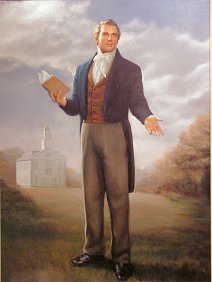
15. What passage in these sections indicates Joseph Smith will still preside over this dispensation even in the next life?
90:3
16. Which passage foreshadows the eventual establishment of the Missionary Training Center (MTC)?
90:11
17. Which passage could appropriately be posted on the door of a teenager’s messy bedroom?
90:18
18. Which passage reassures us that everything will turn out okay for the righteous?
90:24