Note: This site is no longer being maintained. To see the latest version of this post, please go to Points to Ponder in 2 Samuel 11-12; 1 Kings 3; 6-9, 11.
To accompany your Come Follow Me study for June 22-28
In addition to reading these prescribed chapters, you may enjoy:
- The corresponding material from the Institute student manual found in the online Gospel Library
- The “unassigned” chapters of 2 Samuel and 1 Kings to get the “rest of the story.”
- Seeing the following videos. You may also wish to see those mentioned in last week’s Points to Ponder, which cover the later part of David’s life.
If you would enjoy seeing a Kahoot game related to this material which you could use for your own amusement or with your family or class, click here: https://create.kahoot.it/share/2-samuel-11-12-1-kings-3-6-9-11/27179a88-27cc-4d05-a480-33117748217e
Points to Ponder in 2 Samuel 11-12; 1 Kings 3; 6-9, 11
1. How many good deeds and how many bad deeds of David can you find just in the indicated readings for the past three weeks? On balance, was David a good guy or a bad guy?
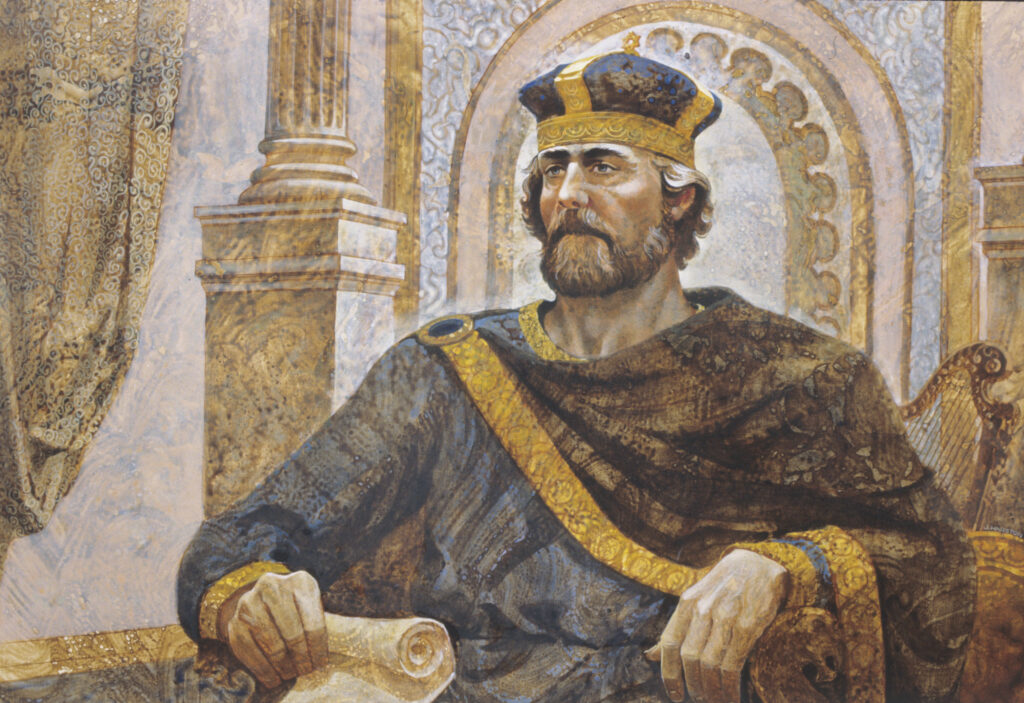
2. Since the prophet Nathan told David “The Lord also hath put away thy sin; thou shalt not die” (2 Samuel 12:13), why are Latter-day Saints so harsh toward him and certain that he has lost his exaltation?
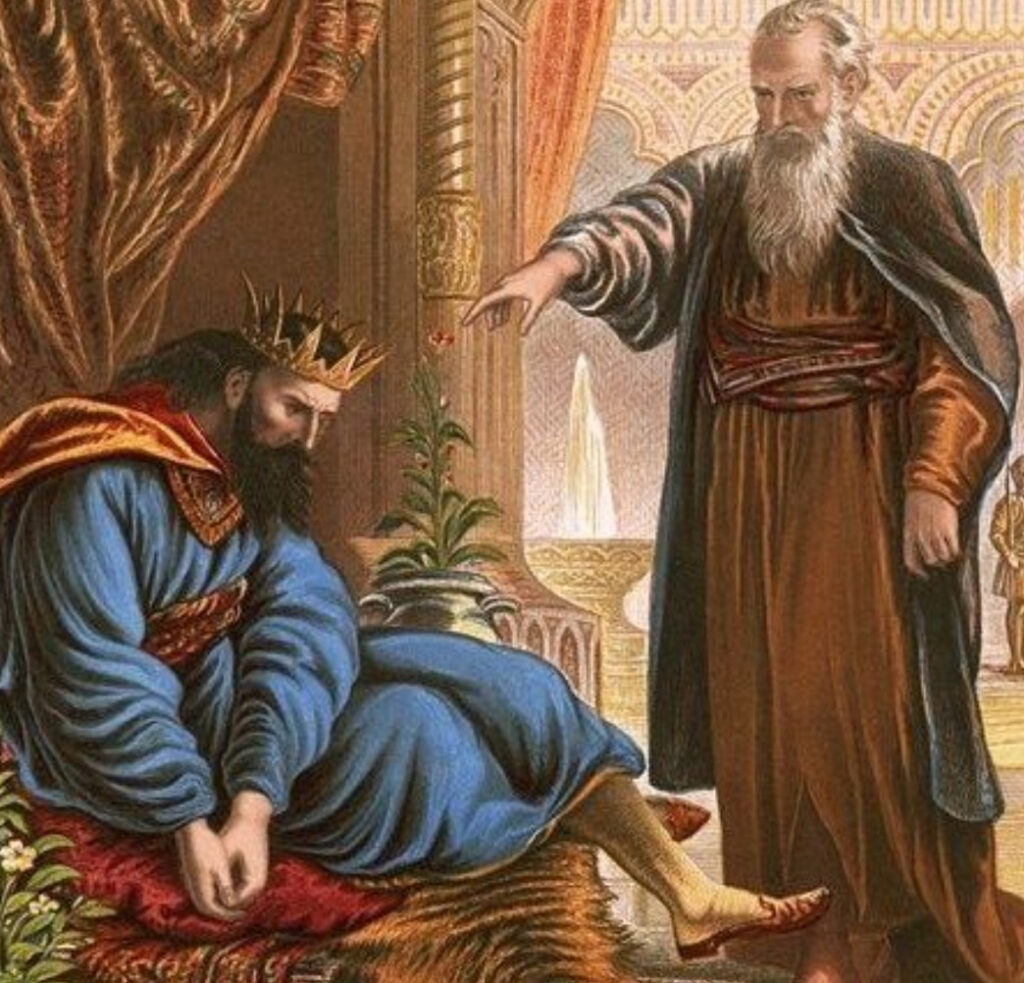
3. What were the steps downward David took that led him ultimately to commit adultery with Bathsheba and later murder to cover it up? What can we learn from David’s mistake?
4. Though “Solomon loved the Lord,” what weakness do we discover in him early on which later appears to have grown to the point that it proved his downfall?
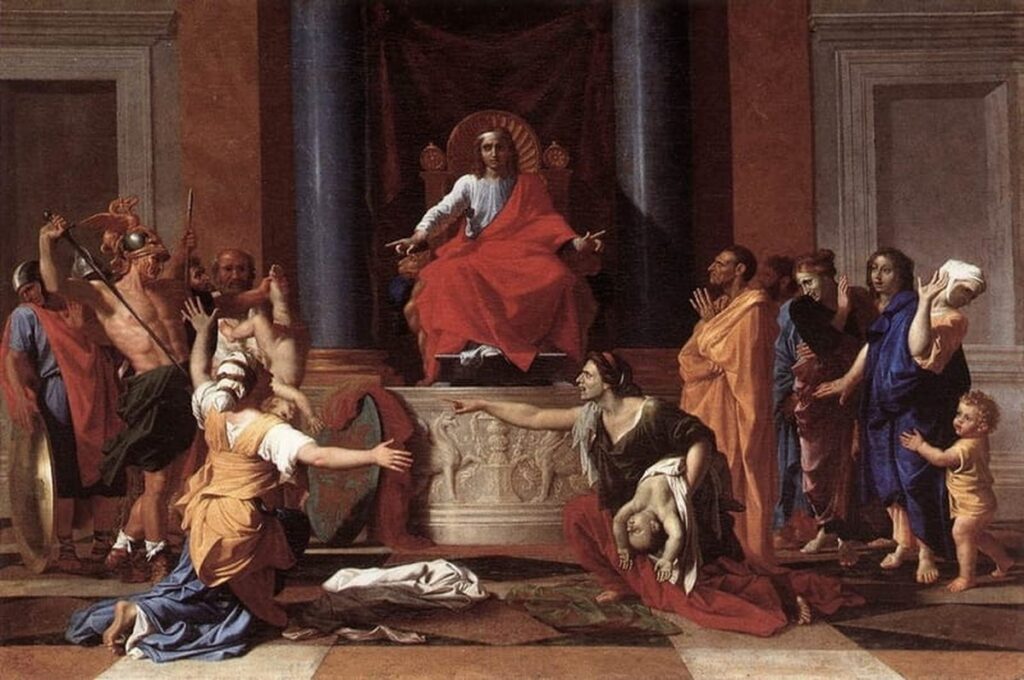
5. What are the major lessons we can learn from the story of the Lord’s inviting Solomon to ask for whatever he wanted? (1 Kings 3:5)
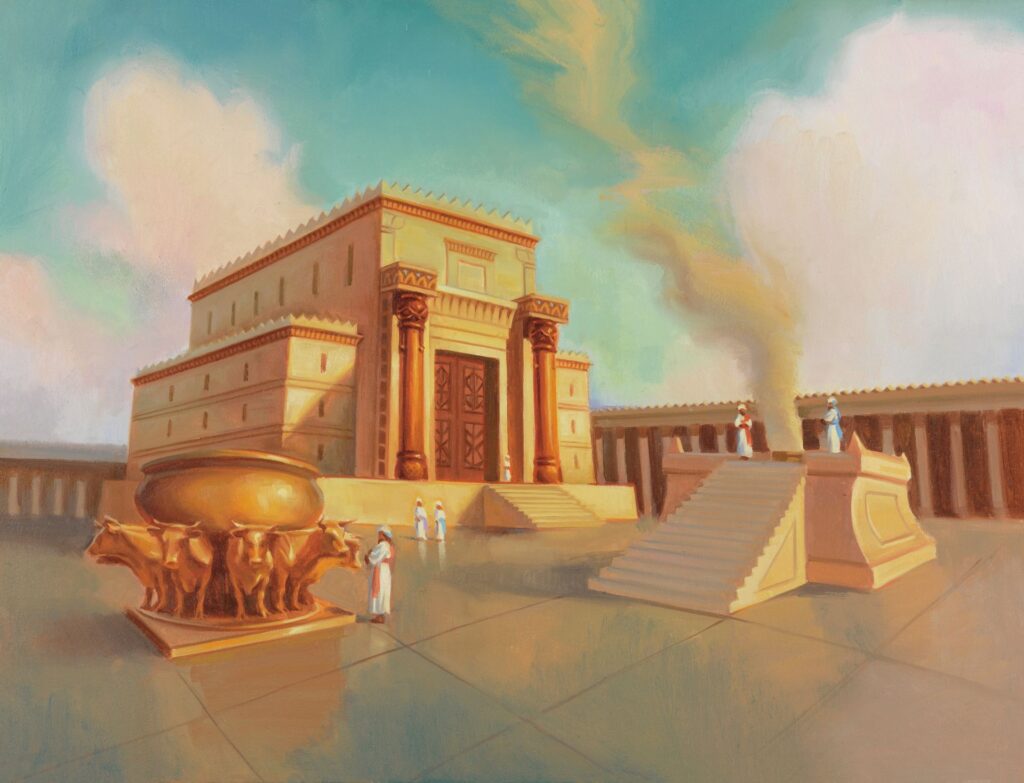
6. What do you think is worth remembering from 1 Kings 8 about the temple?
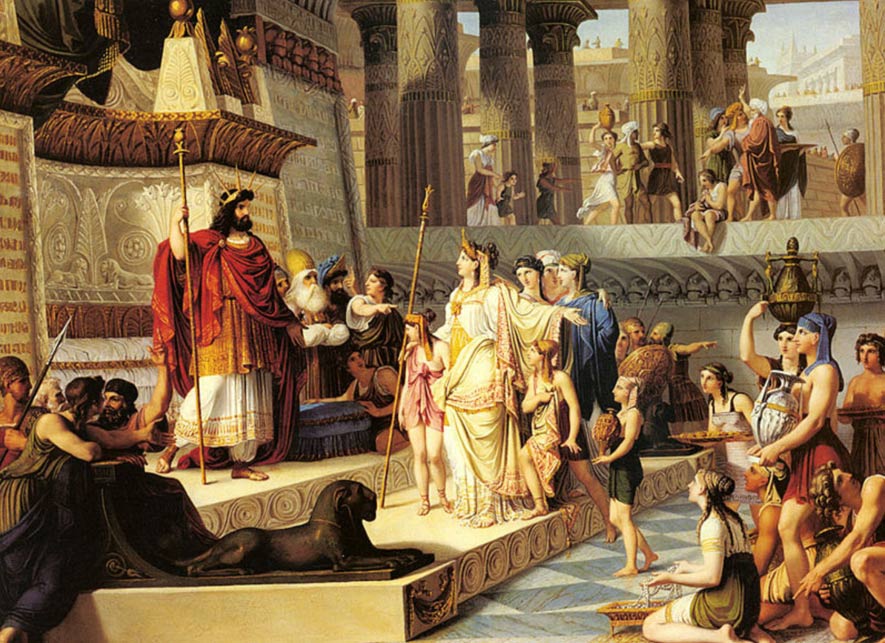
7. Since plural marriage was not prohibited in Solomon’s day, what was so wrong with his having a thousand wives and concubines?
Possible Answers to Points to Ponder in 2 Samuel 11-12; 1 Kings 3; 6-9, 11
1. How many good deeds and how many bad deeds of David can you find just in the indicated readings for this week? On balance, was David a good guy or a bad guy?
Good deeds:
- Sought the Lord’s counsel about going to battle against the Philistines. (2 Samuel 5:19)
- Burned the pagan images of the Philistines (2 Samuel 5:21)
- Sought and followed the Lord’s instructions a second time in battle against the Philistines (2 Samuel 5:23-25)
- Began to bring the ark of the covenant to the city of David with a great and appropriate celebration (2 Samuel 6:1-7)
- Eventually finished the job of bringing the ark into the city with gladness and with sacrifice. (2 Samuel 6:11-20)
- Desired to build a temple to the Lord (2 Samuel 7)
- Fasts and prays for his sick child (2 Samuel 12:16)
- Worships the Lord in His house (2 Samuel 12:20)
- Comforted Bathsheba after the loss of her son (2 Samuel 12:24)
Bad deeds:
- Was upset that the Lord killed Uzzah and wouldn’t finish bringing the ark into the city (2 Samuel 6:8-10)
- Was vengeful toward his wife, Michal (2 Samuel 6:23)
- Commits adultery with Bathsheba (2 Samuel 11:4)
- Has Uriah, Bathsheba’s husband, killed (2 Samuel 11:15-27)
Even though one might point out that there are nine good deeds recorded and only four bad ones, the bad far outweigh the good. Though considered a great hero by the Jews, David, in the eyes of Latter-day Saints in particular, is a prime example of unfulfilled potential and lost opportunity.
2. Since the prophet Nathan told David “The Lord also hath put away thy sin; thou shalt not die” (2 Samuel 12:13), why are Latter-day Saints so harsh toward him and certain that he has lost his exaltation?
Latter-day Saints have information in D&C 132 that the rest of the world does not have. D&C 132:39 tells us: “David’s wives and concubines were given unto him of me, by the hand of Nathan, my servant, and others of the prophets who had the keys of this power; and in one of these things did he sin against me save in the case of Uriah and his wife; and, therefore he hath fallen from his exaltation, and received his portion; and he shall not inherit them out of the world, for I gave them unto another, saith the Lord.” It is worth noting that Joseph Smith also changed 2 Samuel 12:13 to read: “The Lord also hath not put away thy sin that thou shalt not die.” As the footnote in the Latter-day Saint edition of the Bible states, “He was not punished immediately by death; but he did not escape punishment.” David did not die temporally for his sin, but he did die spiritually.
3. What were the steps downward David took that led him ultimately to commit adultery with Bathsheba and later murder to cover it up? What can we learn from David’s mistake?
- He was in the wrong place at the wrong time. This was “the time when kings go forth to battle” (2 Samuel 11:1), but rather than go with his troops, as he should have, he sent Joab to lead the Israelites into battle. We likewise need to be careful to be where we ought to be.
- When David saw Bathsheba washing herself, he should have turned away immediately. The comment that “the woman was very beautiful to look upon” (11:2) suggests that David lingered to look longer. A powerful lesson about the dangers of pornography could be taught here.
- We might note that Bathsheba herself is not necessarily blameless. She might have done more to ensure her privacy while bathing. She might have protested when David invited her to his chambers.
- David wasn’t content to just look. He “sent and inquired after the woman.” (11:3) and later sent messengers and took her. Even then, David might have escaped had he not violated the common-sense rule about never being alone with a member of the opposite sex.
- We see in David’s life how one sin often leads to another. David might not have lost his eternal exaltation had he stopped at adultery. But, as Jacob reminds us in 2 Nephi 9:35, “Wo unto the murder who deliberately killeth, for he shall die.”
4. Though “Solomon loved the Lord,” what weakness do we discover in him early on which later appears to have grown to the point that it proved his downfall?
1 Kings 3:3 tells us that while Solomon loved the Lord, he still “sacrificed and burnt incense in high places,” contrary to the Lord’s instructions. This willingness to think that not all of the commandments applied to him later allowed Solomon to turn his heart away from the Lord completely and worship the pagan gods of his wives and concubines.
5. What are the major lessons we can learn from the story of the Lord’s inviting Solomon to ask for whatever he wanted? (1 Kings 3:5)
As the Lord says in D&C 11:7, “Seek not for riches, but for wisdom…. And then shall you be made rich.” Many in Solomon’s position would have asked for wealth. Others might have asked for fame or honor. Because Solomon wisely asked for wisdom, the Lord blessed him not only with wisdom but with the riches and honor he had not requested. Similarly, as Jacob taught in Jacob 2:19, “After ye have obtained a hope in christ ye shall obtain riches, if ye seek them; and ye will seek them for the intent to do good….”
6. What do you think is worth remembering from 1 Kings 8 about the temple?
- That “the cloud filled the house of the Lord,” symbolic of the Spirit’s filling our temples.
- Temple dedications are sacred and solemn events.
- Though we call temples “the house of the Lord,” God’s presence is in no way confined to the interior of a building. (1 Kings 8:27)
- There is special power in prayers offered in temples. All are invited to submit names to the temple prayer roll. (Implied.)
- To realize the blessings of the temple, it is important that our “heart … be perfect with the Lord our God, to walk in his statutes, and to keep his commandments.”
- Just as Solomon offered bountiful sacrifices at the new temple, so should we consider what we are prepared to sacrifice to worship in the temple and as a consequence of our temple worship.
7. Since plural marriage was not prohibited in Solomon’s day, what was so wrong with his having a thousand wives and concubines?
Referring to David, Moses, Solomon, and others, the Lord said in D&C 132:38 that “in nothing did they sin save in those things which they received not of me.” The problem with Solomon’s wives was not their number. It was not that he lacked the means to support them, or even that there wouldn’t be enough potential wives for all the other men. It was that Solomon chose wives for himself which were not authorized by the Lord or his servants. And they could not have been authorized, because they were primarily pagan women who worshipped pagan gods and who led Solomon into their worship as well. Solomon thus became the third of the first three Israelite kings to start out great and end up in tragedy, as had Saul and David before him.